
What Are the Advantages of 5-Axis Machining?

CNC machining underpins modern manufacturing by delivering repeatable accuracy at production speed. Shops and OEMs rely on it to turn complex designs into profitable, high-quality parts. The next step beyond conventional CNC capability is 5-axis technology.
A 5-axis vertical machining center extends access, control, and precision by adding two rotary axes to the standard X, Y, and Z. That leap changes what you can make, how quickly it ships, and how consistent the results are across batches. Join us as we examine the advantages of 5-axis machining and where it delivers the greatest return.
Enhanced Precision and Accuracy
Multi-axis motion improves precision by keeping critical features tied to a single datum in one continuous setup. Repositioning disappears, so cumulative error does too. Dimensional relationships hold tighter because every feature references the same coordinate system.
Simultaneous 5-axis movement maintains optimal tool orientation and cutting engagement as contours evolve. Better engagement reduces deflection, vibration, and heat, which stabilizes the process at the spindle and at the tip. The result is smaller feature-to-feature variation and tighter positions across the part.
Applications with tight tolerances on intersecting geometries benefit immediately. Think of impeller hubs mated to blades, orthopedic tapers meeting organic surfaces, or housings with angled bores intersecting fine sealing planes. A modern 5-axis vertical machining center controls those relationships in one program.
Complex Geometries and Intricate Designs
Complex parts often require access to undercuts, deep pockets, curved surfaces, and angular features that a 3-axis machine cannot reach without multiple setups. Indexing or manual flips consume time and invite risk.
True 5-axis changes that dynamic by rotating the tool or the part into the cut. Surfaces that once demanded secondary operations become reachable in a single cycle. Integrated kinematics let the spindle follow compound curves while holding constant chip load.
Design teams gain freedom, and engineers are able to specify optimal shapes for performance rather than compromise around tool access. Production teams are also better equipped to hit target cycle times thanks to a more concise setup and process.
Improved Surface Finish
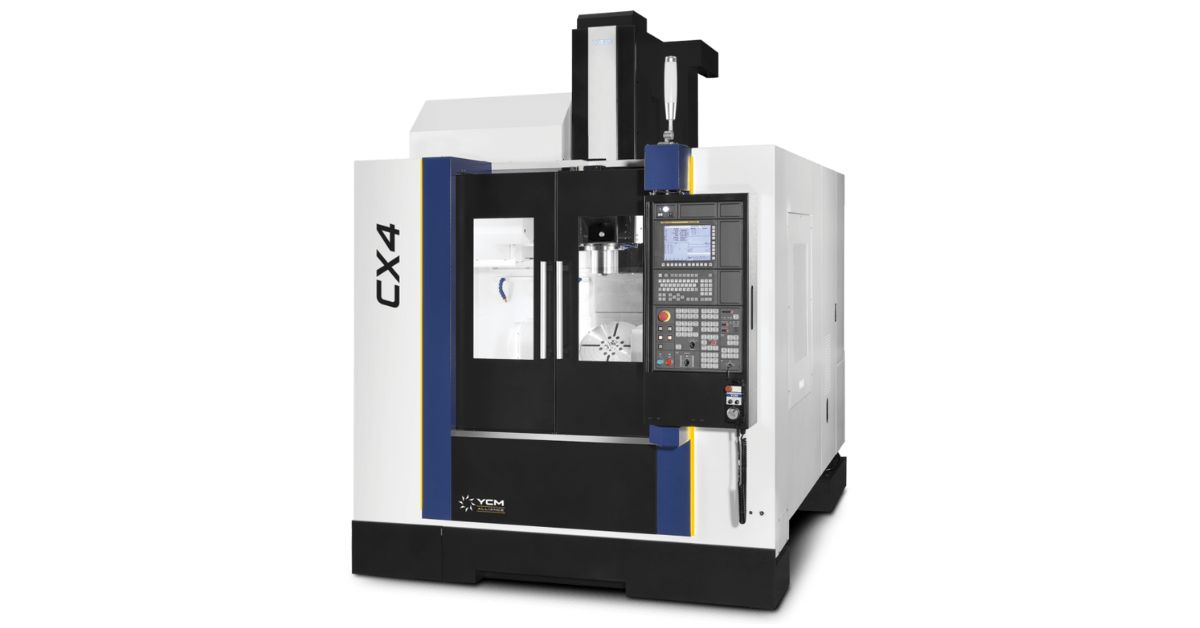
Surface finish improves when the tool meets the surface at the right angle throughout the tool path. 5-axis capability keeps the cutting edge in its sweet spot, even on steep walls and flowing contours. Constant contact and controlled engagement reduce visual flaws.
The spindle’s ability to tilt into tighter areas allows for the use of shorter, more rigid tools. Less stick-out reduces chatter, eliminates witness lines, and protects the spindle bearings from unnecessary side loading. Parts emerge with better finishes right off the machine, which lessens the need for polishing and bench work.
That reduction in manual finishing impacts throughput and cost. Operators spend less time hand blending, and quality teams see fewer cosmetic nonconformances. Surface integrity improves as well, with reduced stress risers and better coating adhesion.
Increased Efficiency and Reduced Setup Times
One-setup machining compresses the entire workflow. Program management becomes easier, with one master program capturing every feature and inspection point.
Cycle times drop because the spindle spends more time cutting and less time waiting on changeovers. Many shops that turn to 5-axis solutions report faster first-article approvals and smoother transitions to volume production.
Those gains scale with part complexity. The tougher the geometry, the bigger the savings. A 5-axis vertical machining center turns multi-day, multi-operation routes into consolidated, predictable schedules.
Versatility and Flexibility
Operational flexibility defines 5-axis value. Simultaneous machining handles organic forms and blended surfaces, while indexed 3+2 strategies excel on prismatic parts with angled features. Teams can choose the right approach per job without changing platforms.
Material range stays broad, from aluminum and polymers to titanium and high-temperature nickel alloys. Smart tool paths, proper tool holders, and optimized feeds and speeds maintain control across materials. CAM systems and modern controls add collision avoidance, machine kinematics compensation, and tool center point control to ensure continuously smooth, reliable motion.
Shops use this flexibility to quote more work confidently. Prototype iterations accelerate, complex fixtures disappear, and small-lot specials stop clogging high-volume lines.
Choosing the Right Machining Center for Your Business
Selecting the optimal machining center requires a careful assessment of your production needs, budget, and future goals. Begin by analyzing the types of parts your shop produces most frequently—do they require complex geometries or tight tolerances that would benefit from advanced multi-axis capability?
Consider anticipated order volumes and whether you’ll be machining a variety of materials. Evaluate spindle power, table size, and tool changer capacity to ensure the equipment can handle your most demanding jobs. Don’t overlook software compatibility, ease of integration with existing systems, and support options from the manufacturer.
Finally, factor in operator expertise and available training resources. The right machining center should address today’s needs while providing flexibility to grow with your business. Prioritizing adaptability, reliability, and service ensures your investment supports both immediate productivity and long-term competitiveness.
Precision, Throughput, and Competitive Advantage
5-axis technology consolidates operations, elevates part quality, and broadens the scope of what your shop can machine. Precision improves through single-setup workflows that remove stack-up, and surface finish sees similar benefits with optimal tool orientation. Efficiency increases as cycle time, handling, and manual finishing all decline. Flexibility expands across materials and industries, enabling confident bids on complex, higher-margin work.
The strongest returns show up where complexity meets tight tolerance. Components with angled, intersecting features, variable wall thicknesses, or contoured surfaces benefit most. Teams gain process control, reduce risk, and accelerate delivery with a single, capable platform.
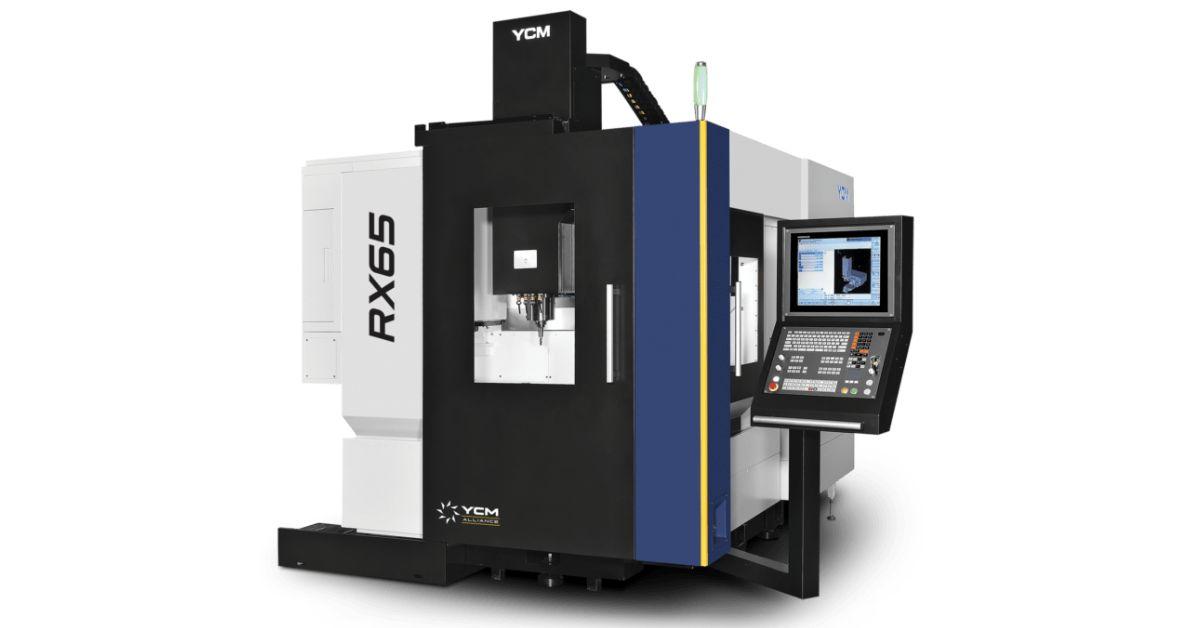
If you are evaluating equipment options, a 5-axis vertical machining center provides a proven route to higher accuracy and faster throughput. Reliable structures, smart controls, and expert support turn advanced kinematics into daily production results. That combination builds a durable edge in quality, cost, and lead time.
Reach out to the YCM Alliance for guidance on machine selection, application engineering, and implementation. Your next program can launch on a solution built for stability, speed, and service. Once your operation experiences the advantages of 5-axis machining firsthand, you’ll see how transformative it can be for all kinds of machining applications.