
A Guide to Precision Machining for the Aerospace Industry

Aerospace programs demand components that survive extreme heat, pressure, and vibration while maintaining uncompromising accuracy. Engineers rely on sophisticated machine tools, optimized processes, and rigorous quality systems to meet that bar. The result is hardware that performs with confidence at altitude and on the ground. This guide explains how design requirements, materials, and technology converge to deliver precision machining in the aerospace industry.
What Is Precision Machining?
Defining Precision
Precision machining means holding tight dimensional tolerances, consistent form and position, and an engineered surface finish. Typical metal-cutting operations for flight-critical parts target positional accuracy within ±0.0002 in (±5 µm). Roundness and flatness often fall below 0.0004 in (10 µm) depending on the feature. Surface finish requirements frequently call for Ra ≤ 16 µin (0.4 µm), with certain sealing or bearing surfaces specified at Ra ≤ 8 µin (0.2 µm). Repeatability across batches matters as much as single-part accuracy, which drives investment in thermal stability, in-process measurement, and process control.
Materials Used
- Aluminum alloys (e.g., 7075-T6, 7050): High strength-to-weight ratio and excellent machinability, widely used in airframes and housings.
- Titanium alloys (e.g., Ti-6Al-4V): High strength at elevated temperatures and corrosion resistance, essential in engine and structural components.
- Nickel superalloys (e.g., Inconel 718, Rene 41): Outstanding high-temperature strength, ideal for hot-section engine parts; challenging to machine.
- Stainless steels (e.g., 17-4 PH, 15-5): Robust corrosion resistance and fatigue performance across brackets, actuators, and fittings.
- Composites (CFRP/GFRP): Exceptional stiffness-to-weight; drilling and trimming require specialized tooling, fixturing, and dust management.
The Importance of Precision Machining in the Aerospace Industry
Aircraft safety and performance hinge on interchangeability, reliability, and lifecycle cost. Tight tolerances ensure precise assembly fit, predictable load paths, and optimal aerodynamic performance. Dimensional stability under thermal cycling protects clearances in engines, actuators, and landing gear. Downstream, precision reduces rework, shortens assembly time, and improves maintainability. Certification demands robust traceability and documented process control, so machining strategies must integrate metrology, SPC, and digital records that satisfy AS9100 and related standards.
Applications in Aerospace
Engine Components
Turbomachinery parts operate under severe thermal gradients and high rotational speeds. Blisks, impellers, turbine disks, and casings require multi-axis contouring, thin-wall stability, and consistent surface integrity. Toolpaths reduce deflection and heat input while maintaining geometric fidelity. Cooling holes, fir-tree slots, and sealing features demand micro-accuracy and burr-free edges. Process engineers manage residual stresses through cutting parameters, tool selection, and post-machining heat treatment.
Airframe Structures
Airframe machining involves large, thin-walled monolithic components with extensive pocketing. Dynamic rigidity, vibration control, and long-reach tooling strategies enable chip evacuation without chatter. Fixture design supports deformation-sensitive zones while minimizing contact-induced distortion. Cycle-time optimization balances high metal removal rates with dimensional stability, often relying on adaptive roughing and consistent thermal conditioning within the machine envelope.
Landing Gear
Landing gear components must withstand heavy loads during takeoff, landing, and taxi operations. Hard-to-machine steels, precise fits for bearings and bushings, and smooth transition radii underpin fatigue resistance. Surface treatments and finishes require extra care and control, since microgeometries directly influence crack initiation and corrosion behavior over long service intervals.

Challenges and Solutions
Material Challenges
Heat-resistant alloys maintain strength under cutting, which elevates tool wear and heat generation. Solutions include high-pressure coolant, sharp, wear-resistant tool grades, and optimized chip-load strategies. Composites can expereince delamination risk, fiber pull-out, and abrasive wear; PCD tooling, peck cycles, and vacuum extraction mitigate damage while preserving edge quality.
Tolerance and Accuracy
Micron-level features require thermal control of both machine and workpiece. Shops can deploy temperature-controlled coolant, spindle thermal compensation, and warm-up cycles to stabilize structures. Additionally, probing routines establish datums, verify tool lengths, and close the loop on critical features. Advanced control systems can also use volumetric error compensation and dynamic look-ahead to maintain tolerance across complex 5-axis paths.
Surface Finish Requirements
Surface integrity influences fatigue life, sealing, and aerodynamic performance. Finishes improve with stable tool engagement, correct nose radii, and balanced cutting speeds. Minimum quantity lubrication (MQL) or through-spindle coolant reduces heat in sensitive alloys. Secondary processes such as superfinishing, isotropic finishing, or shot peening refine surfaces and support fatigue-critical components.
Advancements in Technology
Ultra-High-Speed Machining
Ultra-high-speed machining enables lighter cutting forces, superior finish, and shorter cycle times when properly applied. Spindles operating at 30,000–60,000 rpm with HSK interfaces and dynamic balancing unlock efficient finishing on aluminum and certain thin-wall geometries. Trochoidal and peel milling maintain consistent chip thickness, improve tool life, and reduce heat. In hardened steels and nickel superalloys, hybrid strategies blend high-speed finishing with high-torque roughing to protect tool edges and preserve dimensional control.
Automation and Robotics
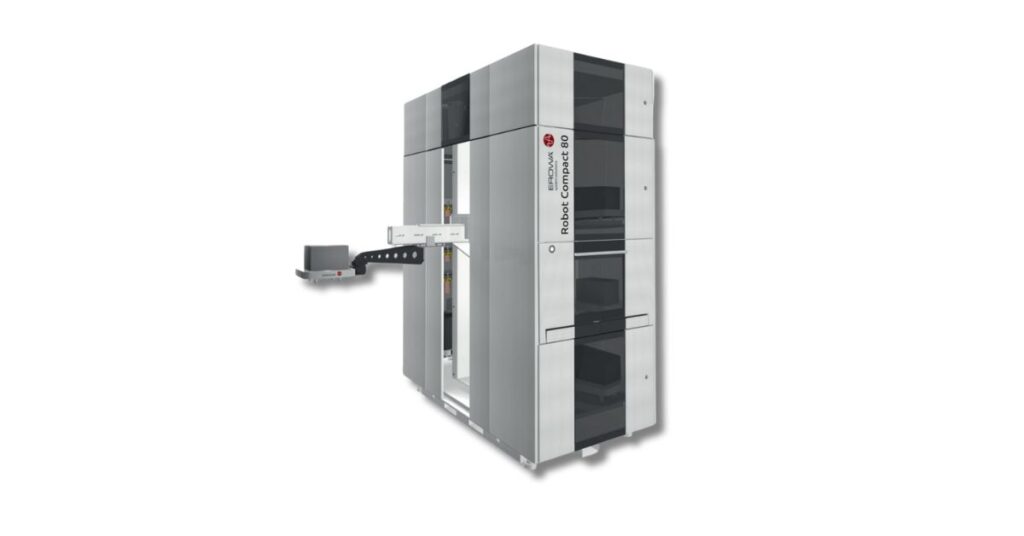
Automation reduces variability, increases spindle uptime, and supports lights-out capacity. Pallet systems, robotic load/unload, and tool management with RFID tracking create predictable flow. In-process measurement drives autonomous decisions such as tool changes or program offsets. Integrated deburring or post-process inspection cells shorten lead times while maintaining audit trails.
Software and Simulation
Digital twins and NC verification de-risk complex 5-axis programs before chips are cut. Toolpath optimization balances engagement, surface finish, and cycle time while avoiding collisions. Machine learning-enhanced monitoring flags tool wear, chatter onset, or thermal drift, enabling preemptive adjustments. Closed-loop feedback between CMM data and CAM strategies tightens capability indices over production lots.
The Future of Precision Machining
Further Automation
Flexible cells will connect mills, lathes, grinders, and inspection stations into unified workflows. Smart scheduling engines coordinate high-mix, low-volume aerospace jobs without bottlenecks. Scalable automation will favor modular designs that adapt to program volatility and rate changes.
Integration of AI and Machine Learning
AI-driven analytics may fine-tune feeds, speeds, and tool selection in real time. Predictive models could anticipate geometry drift or tool failure and adapt paths accordingly. Quality data streams may also merge with ERP and MES systems, accelerating corrective actions and improving first-pass yield across complex assemblies.
Bringing Flight-Ready Precision to Life
Aerospace machining succeeds when materials, machines, software, and people operate within a disciplined process. Every micron of accuracy compounds into quieter cabins, cleaner emissions, and safer operations. Production teams advance their capability by investing in thermal stability, probing, and high-fidelity simulation. The result is predictable delivery of parts that meet specification, pass inspection, and perform in service. That is the promise of precision machining in the aerospace industry.
Partner With YCM Alliance for Precision Machining
YCM Alliance equips manufacturers with high-performance machine tools, automation, and application support built for aerospace requirements. 5-axis vertical machining centers, horizontal platforms, and high-rpm spindle options deliver the rigidity, thermal stability, and repeatability required for engine, airframe, and landing gear components. Application engineers help dial in ultra-high-speed machining strategies, probing routines, and process control so programs hit both tolerance and takt time.
Shops scaling capacity can leverage palletized automation, tool management systems,
Production leaders ready to advance capability can contact YCM Alliance for a tailored assessment, machine recommendations, and turnkey process development. Reach out to review your part families, tolerance stack-ups, and throughput targets, and align on a solution that delivers measurable performance on day one.