
Machining a Massive Aerospace Blisk | TRIMILL VS1614 Case Study
Large-Part 5-Axis Machining Meets Real-World Problem Solving
What does it take to transform a massive piece of 4140 steel into a complex aerospace blisk?
Titans of CNC is putting the TRIMILL VS1614 to the test in a multi-part machining series that follows the project from the first cut through final machining. Starting with a 27-inch-diameter, 5-inch-thick steel blank, the team must solve challenges involving workholding, tool access, rigidity, fixturing, programming and aggressive material removal along the way.
This ongoing case study follows the process—not just the finished part—to show what large-scale 5-axis machining really demands.
[Series Status: 3 of 4 Videos Published]
THE CHALLENGE
A Massive Part. A Complex Process.
Machining a blisk at this scale requires much more than simply loading a program and pressing cycle start.
Before the complex blade geometry can ever be machined, the Titans of CNC team has to establish a strategy for securely holding and positioning a substantial steel workpiece while maintaining access to the features that will eventually be machined from multiple directions.
The process requires careful consideration of:
- Workholding and fixture design
- Part weight and positioning
- Tool and spindle clearance
- Multi-axis accessibility
- Machine rigidity
- Cutting tool selection
- Material removal strategy
- Post-processing and programming
- Setup planning across multiple operations
As the project progresses, each decision affects the operations that follow.
And sometimes the solution has to change.
THE MACHINE
TRIMILL VS1614 - Built for Demanding 5-Axis Machining
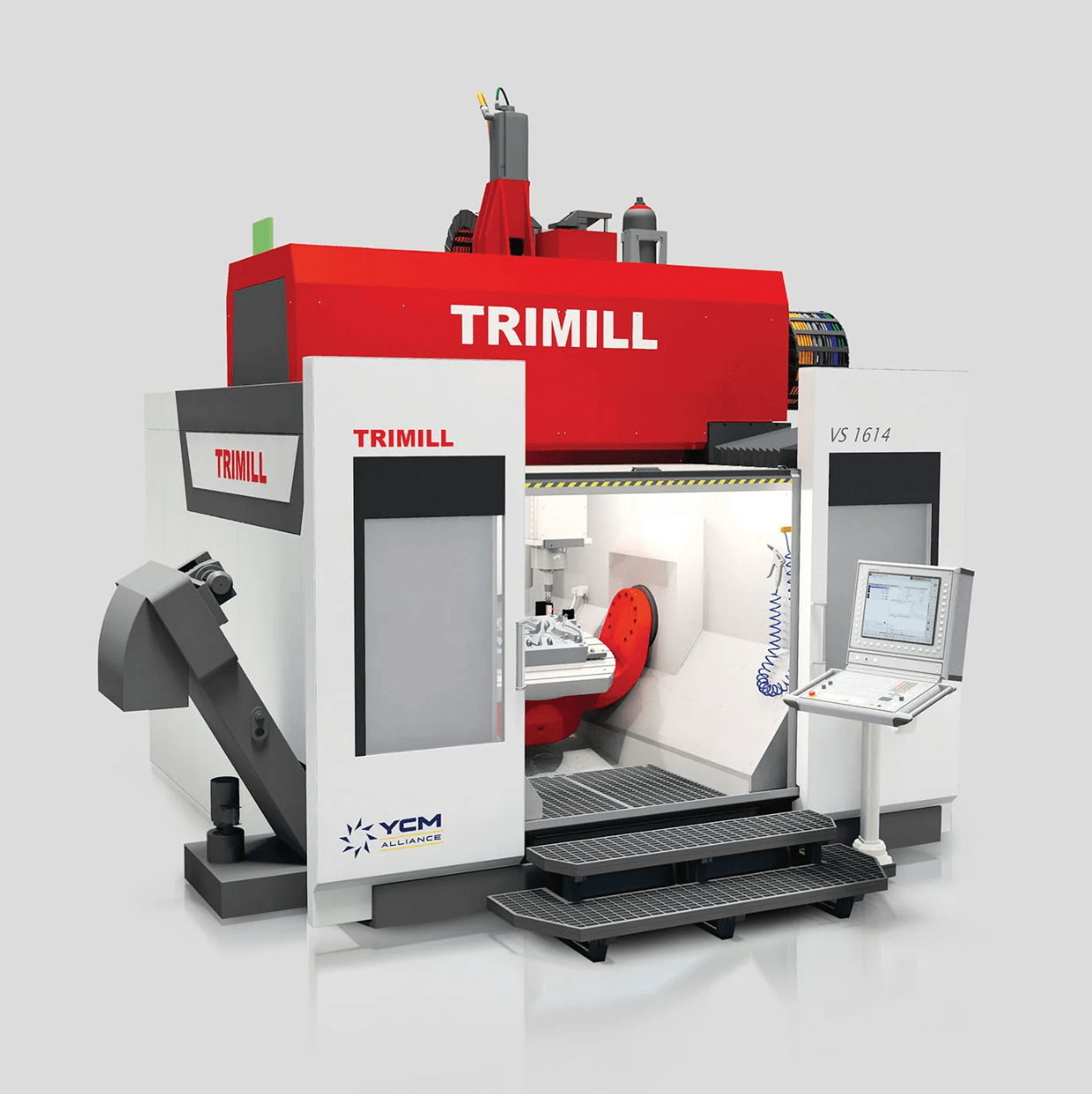
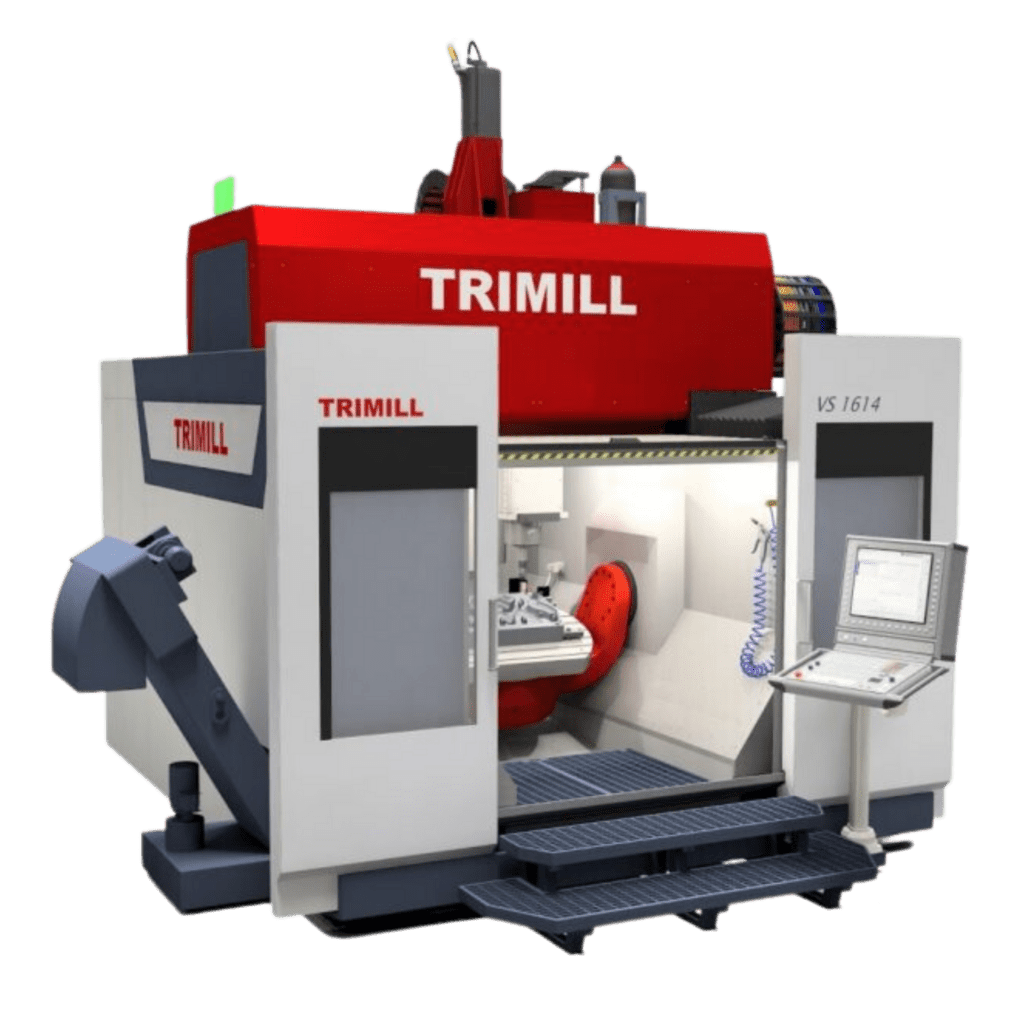
At the center of the project is the TRIMILL VS1614 5-axis machining center.
For this application, the machine combines the rigidity, spindle performance and multi-axis movement necessary to aggressively machine a large steel workpiece while maintaining the control required for increasingly complex operations.
The machine featured in the Titans project is configured with an HSK 100 spindle capable of nearly 60 horsepower, approximately 260 ft-lbs of maximum torque and 15,000 RPM.
Its trunnion table provides the ability to position substantial workpieces through ±90 degrees, giving the team the access required as the blisk progresses from a large steel blank toward its final geometry.
Machine: TRIMILL VS1614
Material: 4140 Steel
Starting Blank: 27" Diameter × 5" Thick
Process: 5-Axis CNC Machining
Application: Aerospace Blisk
Spindle Interface: HSK 100
Maximum Power: 59 HP (44 kW)
Maximum Torque: 259 ft-lbs (352 Nm)
Maximum Spindle Speed: 15,000 RPM
THE MACHINING SERIES
PART 1 - Solving Complex Problems to Machine a Monster Blisk
The project begins by establishing the foundation for everything that follows.
With the steel blank toe-clamped directly to the TRIMILL's table, the TITANS team begins the first preparation operation. Aggressive roughing removes material while subsequent machining establishes the surfaces, pockets and mounting features required for the next setups.
A high-feed milling strategy handles significant material removal before additional tooling is used to improve surface flatness and reach geometry the larger cutter cannot access.
The team also machines pockets into the blank to reduce weight before later 5-axis positioning, along with the holes, counterbores and threads required for the workholding system.
Rather than finishing these features immediately, approximately .100" of material is intentionally left in several areas. At this stage, the goal isn't the finished blisk.
It's creating the foundation needed to machine it.
Key Takeaways
- Initial preparation of the 4140 steel blank
- High-feed rough machining
- Strategic material removal
- Preparation for multi-operation workholding
- Machining mounting and pull-stud features
- Consideration of part weight during 5-axis movement
- Establishing flat, stable locating surfaces
PART 2 - Our Giant Blisk Setup Has a BIG Problem
With the initial preparation complete, attention shifts from the workpiece to one of the most important elements of the entire project:
How do you hold it?
The next operation requires greater access around the blisk, meaning the workpiece must be elevated above the machine table while remaining rigidly and securely located.
Instead of relying on a standard setup, the TITANS team machines a dedicated fixture directly on the TRIMILL VS1614.
The fixture incorporates locating features, towers, pull-stud mounting locations and large threaded connections designed to support the part through the operations ahead. The process itself becomes another demonstration of precision machining, with careful finishing used to create flat locating surfaces and accurately machined mounting features.
Once completed, the massive blank is transferred onto the new workholding system.
Then the team discovers a problem.
New toolholders being incorporated into the machining strategy require additional clearance. The approximately eight inches of elevation originally designed into the setup isn't enough. The workpiece needs to sit roughly another two inches higher.
Rather than hiding the setback, the series captures an important reality of complex manufacturing:
Machining difficult parts requires continuous problem solving.
Tooling, workholding, machine movement and part geometry all have to work together. When one element changes, the entire setup may need to change with it.
Key Takeaways
- Custom fixture machining
- Workholding designed specifically for the application
- Precision locating and mounting surfaces
- Tool-access and clearance considerations
- Multi-axis setup planning
- Fixture validation before aggressive machining
- Real-world engineering iteration
PART 3 - 5-Axis Machining a Monster Blisk
With the fixture modifications complete, the TITANS team moves into the next major stage of the project: machining the blisk's complex geometry and 36 blades.
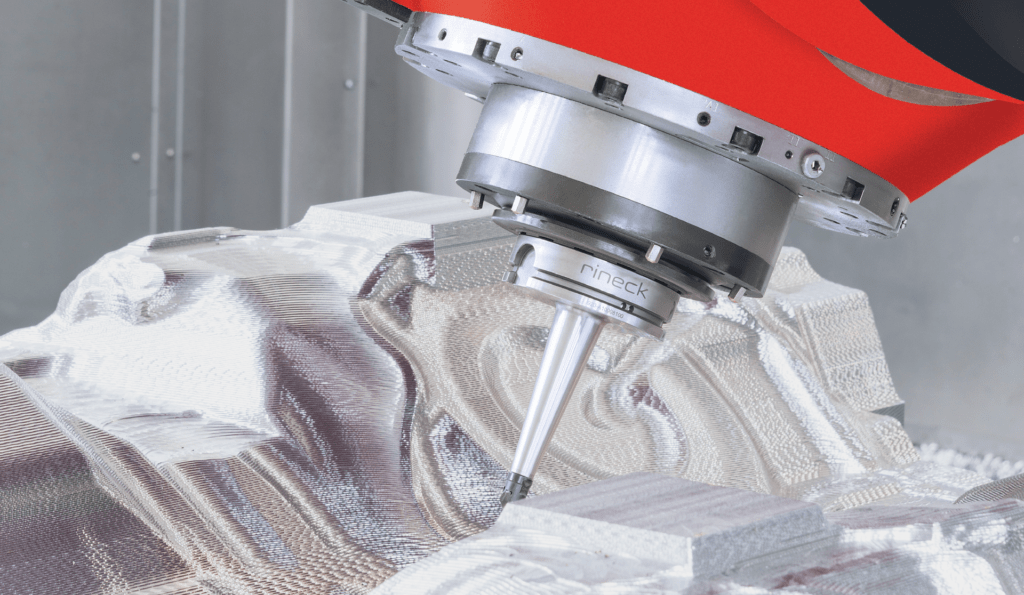
The operation begins with additional material removal, including weight-reduction pockets, the center bore and contoured interior surfaces. Toolpaths and cutting strategies are carefully selected to balance machining efficiency with workpiece rigidity.
Next, the TRIMILL VS1614 rotates the approximately 650-pound workpiece 90 degrees for full 5-axis blade machining.
The blades are progressively roughed using shorter, more rigid tools before longer cutters reach their full depth. Additional material is intentionally left on the blades to minimize deflection during subsequent finishing operations.
The team also encounters a potential collision, prompting the TRIMILL's dynamic collision monitoring system to stop the program. Adjustments to the B-axis limits allow machining to continue safely.
By the end of Part 3, all major rough machining is complete, leaving approximately .050" of material for the final finishing operations.
Key Takeaways
- Fixture rigidity and cutting stability
- Strategic material removal and weight reduction
- 5-axis machining of a 650-pound workpiece
- Progressive roughing of 36 blades
- Collision monitoring and B-axis adjustments
- Maintaining blade rigidity during machining
- Preparing complex geometry for final finishing
PART 4 - COMING SOON
MORE THAN MACHINE CAPACITY
Large-Part Machining Is a System
A project like this demonstrates why machine specifications alone don't determine whether a difficult component can be produced successfully.
The machine, spindle, cutting tools, programming, workholding and people behind the process all have to operate as one system.
Throughout the series, the TRIMILL VS1614 provides the rigidity, power and 5-axis positioning required to tackle the application. But just as important is the engineering behind every setup—from determining how the part will be held to anticipating tool clearance and planning how one operation prepares the workpiece for the next.
That combination of capable technology and manufacturing expertise is what turns difficult machining challenges into workable solutions.
READY FOR YOUR NEXT MACHINING CHALLENGE?
YCM Alliance brings together world-class machine tool technology, application expertise and a nationwide network of experienced dealers to help manufacturers identify the right solution for demanding applications.
Discover what TRIMILL machining technology can bring to your operation.