
Inside the YCM Factory: How YCM CNC Machines Are Built
When manufacturers evaluate a CNC machine, it's easy to focus on specifications: spindle speed, rapid traverse rates, tool capacity, and cutting performance. But what often determines a machine's long-term accuracy, reliability, and lifespan happens long before the machine reaches the shop floor.
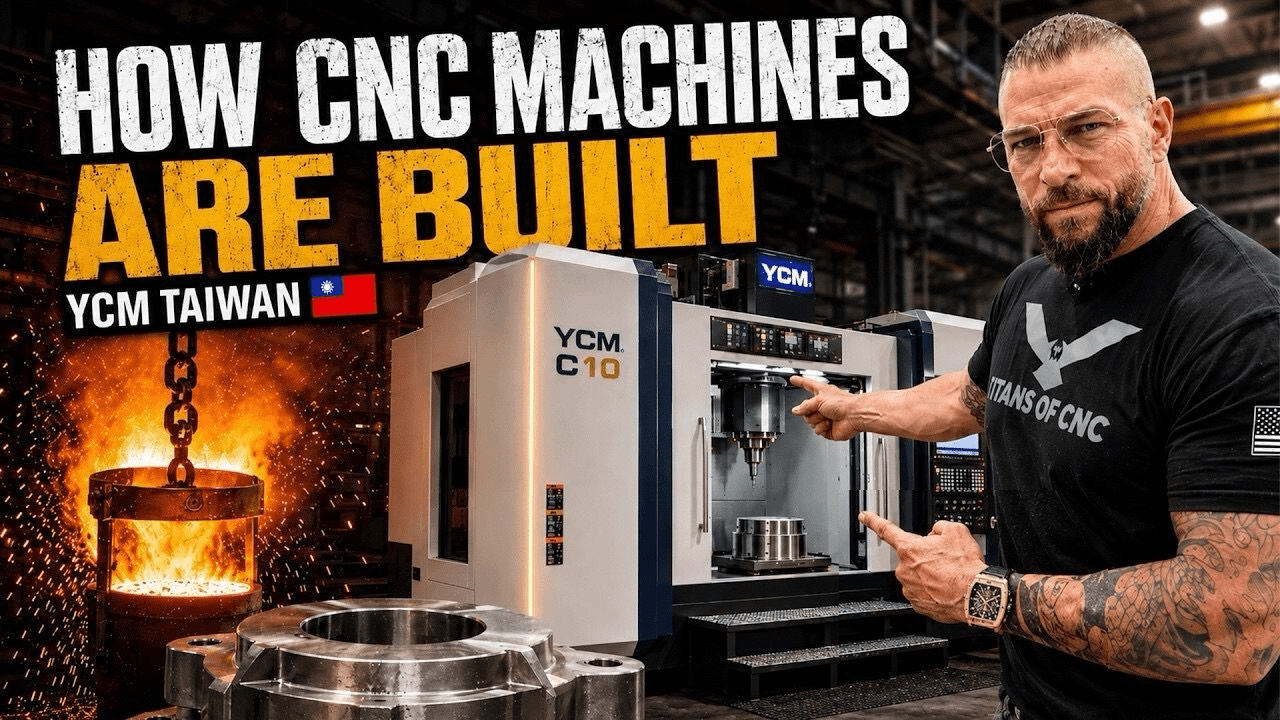
Recently, Titans of CNC founder Titan Gilroy toured YCM's manufacturing facilities in Taichung, Taiwan, getting an inside look at how YCM machines are designed, built, and tested. What he found was a company deeply committed to engineering, manufacturing control, and long-term machine performance.
It All Starts with the Casting
"The foundation of the machine."
That phrase came up repeatedly throughout the tour, and for good reason.
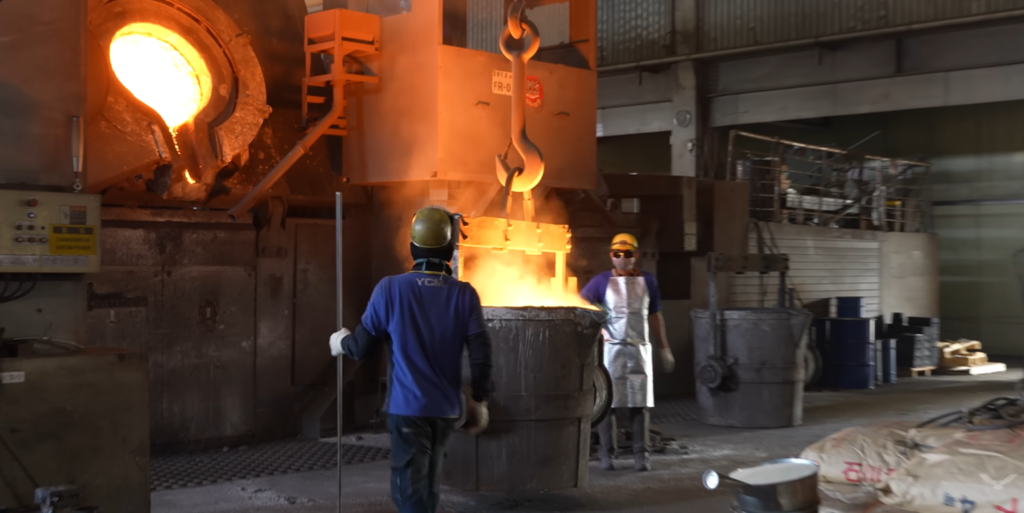
Unlike many machine tool builders that outsource major structural components, YCM operates its own foundry and has more than 40 years of casting experience. According to YCM General Manager Rick Chen, the company controls the casting process from the very beginning, developing proprietary formulas and manufacturing methods designed to maximize strength, stability, and long-term performance.
The process begins with custom mold patterns and large induction furnaces capable of producing castings up to 10 tons. Once cast, components undergo vibration treatment, heat treatment, deburring, painting, and a natural aging process that can last anywhere from 30 to 90 days.
This aging process helps relieve internal stresses within the material, contributing to long-term dimensional stability.
Why does this matter?
Because machine accuracy begins with rigidity and stability. A strong casting helps reduce vibration, improve surface finish, maintain tighter tolerances, and support consistent performance over decades of operation.
As Titan noted during the tour, many YCM machines remain in production after 20 or even 30 years while continuing to hold accuracy requirements (Did you know that the wheels on some of the world’s most iconic supercars are machined on YCM equipment? SAI utilizes a massive fleet of over 600 YCM CNC machines to turn engineering into artwork, some running for over 25 years. Watch the video here.)
Manufacturing, Not Assembly
One of the most important takeaways from the tour was YCM's commitment to controlling the manufacturing process.
"We're complete manufacturing from raw material down to the finished product," explained Rick Chen. "We control the process."
That distinction matters.
Many machine builders rely heavily on outside suppliers for critical components and focus primarily on final assembly. YCM takes a different approach, manufacturing many of the most important machine components in-house.
This level of vertical integration gives YCM greater control over quality, consistency, and engineering standards throughout production.
The result is a machine designed not only to perform on day one, but to deliver reliable results year after year.
Building the Heart of the Machine
After visiting the foundry, the Titans team toured YCM's spindle manufacturing operations.
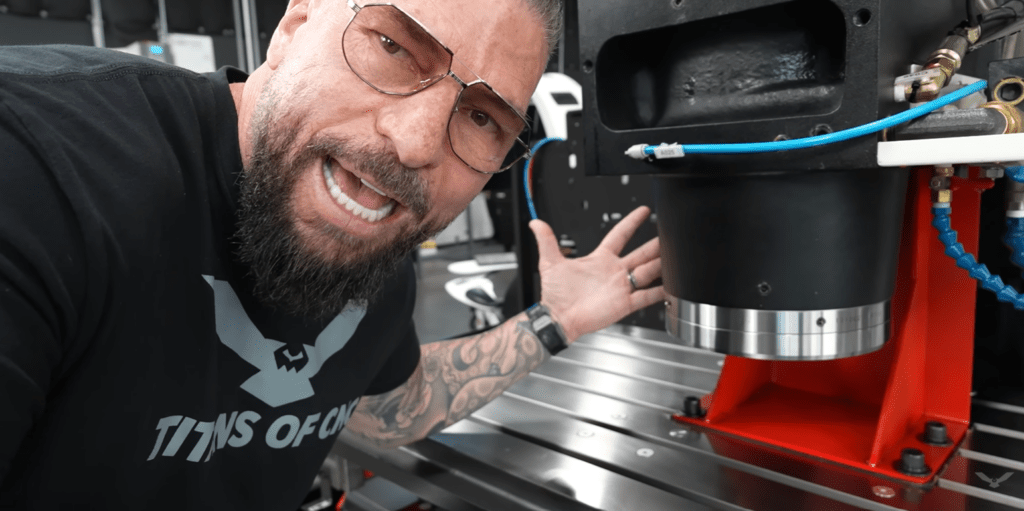
For many machinists, the spindle is the heart of the machine. It directly impacts cutting performance, accuracy, productivity, and overall machine capability.
YCM manufactures approximately 200 spindles per month, producing spindle systems that range from 12,000 RPM up to 40,000 RPM depending on the application.
Every spindle undergoes extensive testing, including repeated clamp and unclamp cycles to verify reliability before installation.
The company also operates temperature- and humidity-controlled machining environments for critical precision components, helping ensure consistent accuracy throughout the manufacturing process.
This focus on precision manufacturing reflects YCM's roots in mold and die work, where even the smallest deviation can impact final part quality.
Engineering for Rigidity and Accuracy
Throughout the tour, Titan repeatedly highlighted something many machinists immediately notice when standing next to a YCM machine: the structure.
Heavy castings. Large guideways. Robust spindle assemblies.
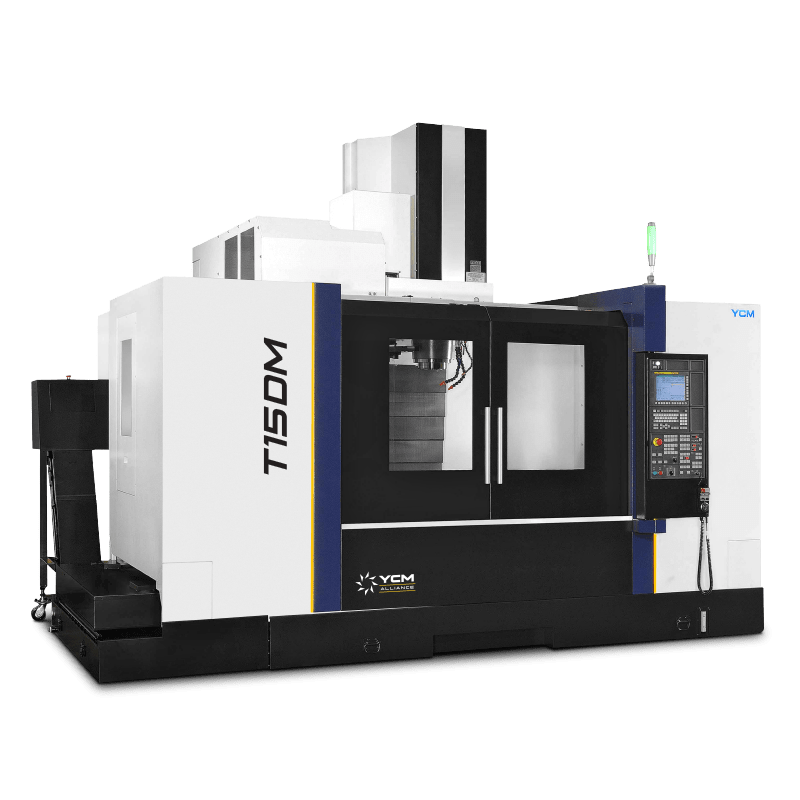
According to Titan, YCM machines can be significantly heavier than comparable models because of the company's emphasis on rigidity and machine structure.
Several machine designs featured during the tour showcased patented engineering approaches intended to maximize support and minimize deflection. One example is YCM's T11 and T13 machining centers, which utilize a unique axis configuration that keeps the table fully supported throughout travel.
The goal is simple: improve rigidity, maintain accuracy, and provide consistent performance during demanding machining applications, including titanium, Inconel, aerospace components, and mold work.
The same philosophy extends to YCM's assembly process, where hand scraping remains an important part of machine construction. Rather than treating scraping as an art alone, YCM has developed standardized processes to ensure consistency from machine to machine.
Smart Manufacturing Meets Traditional Craftsmanship
While much of the tour focused on castings, machining, and assembly, another theme emerged: continuous improvement.
YCM has invested heavily in smart manufacturing technologies that provide real-time visibility into production operations. Through its digital manufacturing platform, supervisors can monitor machine utilization, production flow, efficiency metrics, and process performance across the factory.
The system even incorporates advanced visual recognition technology that can automatically track workflow progress and identify potential safety incidents.
It's a modern approach to manufacturing that complements YCM's decades of experience in machine tool construction.
Why It Matters
At the end of the day, manufacturers aren't buying castings, guideways, or spindle assemblies.
They're buying confidence.
Confidence that a machine will maintain accuracy.
Confidence that it will deliver reliable performance.
Confidence that it will continue producing quality parts for years to come.
The Titans of CNC factory tour offered a rare behind-the-scenes look at the engineering, manufacturing, and quality systems that support that confidence.
From foundry operations and spindle production to assembly, inspection, and smart manufacturing technologies, the tour demonstrated YCM's commitment to controlling the factors that matter most in machine tool performance.
As Rick Chen put it, YCM is an engineering company.
After seeing the process firsthand, it's easy to understand why.
Watch the Full Titans of CNC YCM Factory Tour
See the complete behind-the-scenes tour and discover how YCM machines are built—from raw materials to finished machine tools.
Interested in learning how a YCM machine can support your manufacturing goals? Contact YCM Alliance or your local YCM distributor to discuss your application.
Contact Us
"*" indicates required fields